Getting any role can be harder in today's economy, and demand for jobs is high. Charities need more than fundraisers and frontline support workers, they also rely on people with experience in marketing, communications, finance, HR, IT, administration and project management. You don't necessarily need to have worked for a charity before to be a strong candidate.
The challenge is knowing where to look, how to present your experience and what employers are looking for. At Get Jobs, we help connect jobseekers with opportunities across the charity and not-for-profit sector. Here are our tips on how to get a job in the charity sector.
1. Start by exploring the different types of charity jobs
Before you start applying, think about the kind of work you'd like to do and the skills you could bring to a charity. The charity sector covers a wide range of roles. Depending on your experience and interests, you could work in:
● Fundraising: Helping charities raise money through campaigns, events, corporate partnerships and individual donations.
● Marketing and communications: Creating content, managing social media, promoting campaigns and raising awareness of a charity's work.
● Finance and administration: Managing budgets, processing payments, maintaining records and keeping day-to-day operations running smoothly.
● Project management: Coordinating projects, managing resources and helping charities deliver services or achieve their goals.
● HR and people management: Supporting recruitment, staff development, employee wellbeing and volunteer management.
● Frontline and community support: Working directly with beneficiaries, delivering services or supporting people in local communities.
These are just some examples. Charities also recruit for roles in IT, research, policy, leadership and many other specialist areas. If you're changing careers, don't assume you need to start from scratch, your existing experience could be exactly what a charity is looking for.
Explore charity jobs on Get Jobs to see the types of roles available and get a better idea of where your skills might fit.
2. Highlight your transferable skills
One of the most common challenges when applying for charity jobs is knowing how to make your previous experience relevant, particularly if you've worked in another sector. The good news is that many of the skills charities need are the same ones you've developed throughout your career.
For example, if you've worked in retail or customer service, you may have strong communication skills and experience dealing with different people.
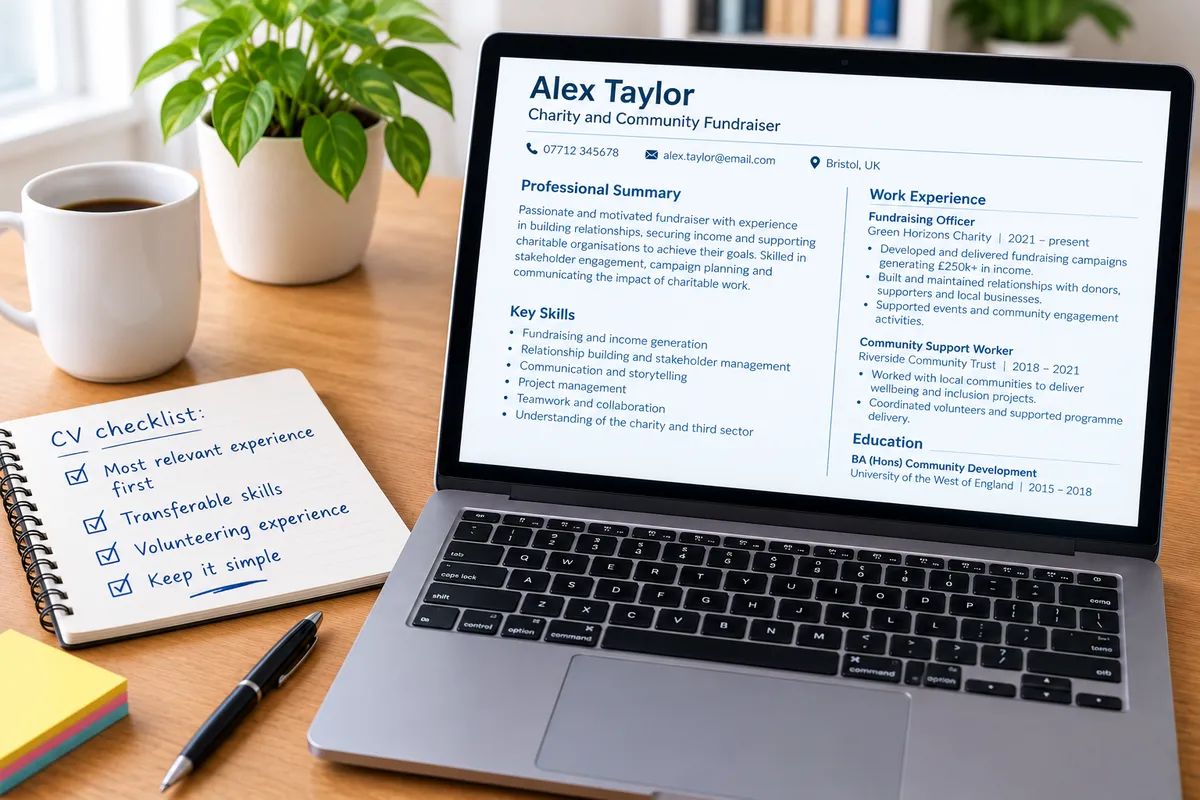
Think about the skills you've gained through previous jobs, education, volunteering or other relevant experiences. When writing your CV, don't just list your responsibilities. Give examples of what you've achieved and explain how your experience relates to the role you're applying for. You don't need to have done the exact same job before, you just need to show the employer what you can bring to the role.
For more guidance, read our article on how to write a CV for a charity or third-sector job.
3. Consider volunteering to gain experience
If you're looking for a charity job but don't have much relevant experience, volunteering can be a useful way to get started. It gives you the chance to develop new skills, understand how charities operate and gain practical experience that you can draw on in future applications.
You could help organise fundraising events, support a community project, assist with communications or volunteer your professional skills to help an organisation with a particular task. Volunteering can also help you build confidence, meet people working in the sector and learn more about the types of roles available.
It's worth remembering that volunteering isn't a requirement for every charity job. If you already have relevant professional experience, you may be ready to apply directly for paid positions. If you do decide to volunteer, look for opportunities that fit your interests and help you develop skills relevant to the roles you want. Even a small amount of experience can give you useful examples to discuss in an interview.
4. Know where to find charity jobs
Knowing where to look can save you time and help you discover opportunities you might otherwise miss. Here are a few places to include in your job search.
Specialist charity job boards
Charity job boards bring vacancies from across the sector together in one place, making it easier to find roles that match your experience and interests. At Get Jobs, you can search for charity and not-for-profit jobs by keyword, job title or charity name. It's a straightforward way to explore opportunities across the sector.
Charity websites
If there's a particular organisation you'd like to work for, visit its website and look for a 'Careers' or 'Work with us' page. Some charities advertise vacancies directly on their websites and allow you to register your interest in future opportunities.
LinkedIn and professional networks
Follow charities you're interested in and keep an eye on their updates. LinkedIn can be a useful way to discover vacancies, learn more about organisations and connect with people working in the sector.
Job alerts and newsletters
Setting up job alerts can help you keep track of new vacancies without having to start your search from scratch every day. Try a range of relevant keywords and job titles, particularly if you're open to different types of charity work.
You can also sign up for Get Jobs' Jobs Roundup to receive updates about charity and third-sector vacancies.
Graduate and entry-level opportunities
If you're starting your career, look for assistant, trainee and entry-level roles, as well as internships, apprenticeships and graduate programmes where available. These can provide a route into the sector while helping you develop your skills. Don't overlook smaller charities, either. They may offer opportunities to take on varied responsibilities and build experience in different areas of an organisation.
5. Be persistent and keep learning
Finding a job in the charity sector can take time, particularly when you're competing for popular roles or trying to move into a new area of work. If you don't get an interview or receive a rejection, try not to take it as a sign that you're unsuitable for the sector. Review your application, look for opportunities to improve your CV and continue applying for roles that match your skills.
It can also help to broaden your search. Consider different job titles, smaller organisations or roles that would allow you to build experience before moving into your longer-term career goal. You don't have to have your entire career mapped out from the beginning. Focus on finding a role that fits your current skills and gives you opportunities to learn and develop.
Find your next charity job with Get Jobs
Getting into the charity sector doesn't have to mean starting your career again. Your existing skills and experience could be valuable to an organisation making a difference, even if you've never worked for a charity before. The key is knowing what you're looking for, presenting your experience clearly and making use of the right job-search resources.
At Get Jobs, we're here to make finding your next opportunity easier.
Search charity jobs on Get Jobs to explore vacancies by job title, keyword or charity name.